
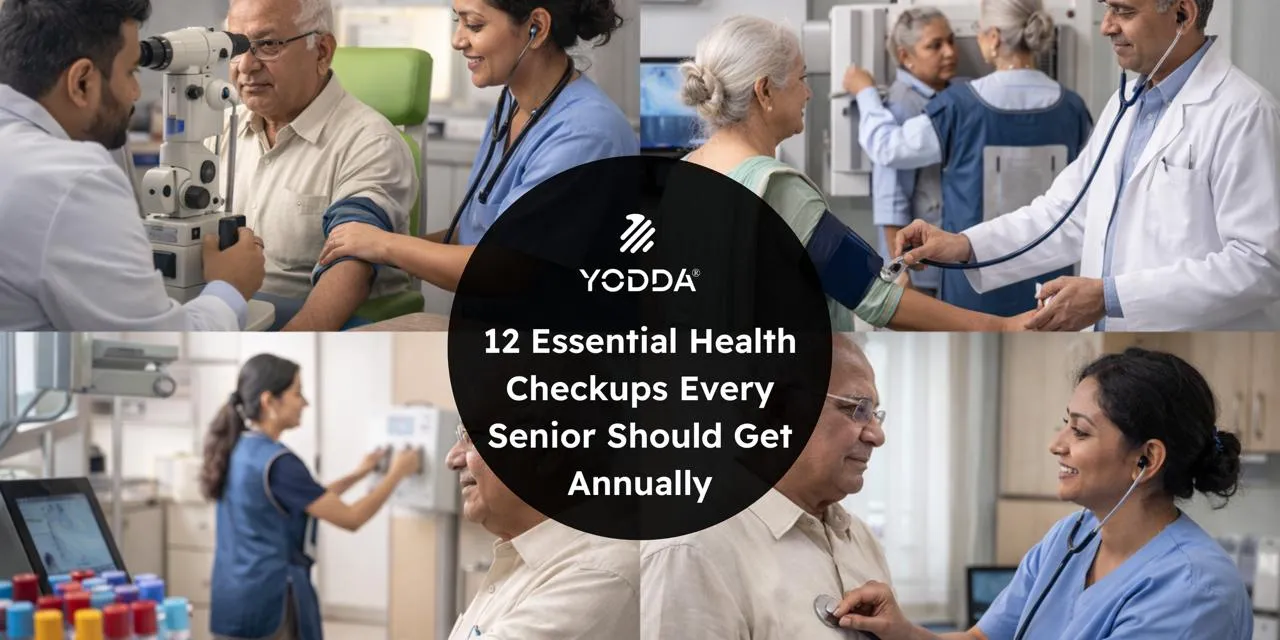
A health review works best when there is time to discuss what matters to your parent. Bring their concerns, medicine list, previous reports and questions about daily life. The twelve areas below can help prepare that conversation; they are not a package every elder needs each year.
Appointments can be difficult to fit around work, transport and other responsibilities. Agree with your parent what help would make a visit easier, whether that is booking, companionship or organising reports.
Some health concerns have few obvious symptoms, while others first show up as changes in daily routines. A doctor can bring that information together and recommend the checks that are useful for the person.
Planning a Review Around the Individual
A regular review can help the doctor compare information over time and discuss ongoing care. Ask when the next visit is needed and whether particular tests are necessary; an appointment does not guarantee early detection.
Explore support from Yodda
12 Areas to Discuss With the Care Team
1. Energy and Changes in Daily Function
Ask whether changes in energy, weakness or breathlessness need assessment. These symptoms have several possible causes; a clinician decides which investigations are relevant. The blood-test guide explains CBC and other laboratory terms. Further reading: pac 20384919.
2. Blood Sugar and Existing Diabetes Care
If your parent already has diabetes, bring the current care plan. Ask the treating team what monitoring is needed, how results will be reviewed and what preparation or medicine instructions apply to any planned assessment. Blood-glucose testing information.
3. Blood Pressure Monitoring
Ask whether blood-pressure readings would be useful, how they should be taken and what personal instructions apply. Confirm which changes need a call and who will review any home records. Further reading: Home blood-pressure monitoring.
4. Cardiovascular Risk and Cholesterol
Ask how your parent’s history, current treatment and earlier results affect the cardiovascular review, and whether a lipid test would answer a useful question. Further reading: lipid profile.
5. Kidney Health and Medicine Review
Kidney-related tests may include blood or urine measurements. Ask what they are intended to assess, whether medicines affect the plan and how any findings will be explained. Further reading: kidney function test.
If someone has been diagnosed with end-stage kidney disease, they can consider home dialysis.
6. Liver Health and Treatment Questions
A medicine review may include a discussion about whether liver tests are relevant. Ask what the doctor is checking and how a result would affect the plan, rather than assuming every person needs the same panel. Further reading: liver function test.
7. Thyroid-Related Concerns
Ask whether thyroid testing is relevant to symptoms, medical history or medicines, and how the result would be interpreted. It is not automatically required each year for everyone over a certain age. Further reading: TSH blood test.
8. Bone Health and Previous Falls
Falls are one of the leading causes of serious injury and hospitalisation in elders. Osteoporosis, where bones become weak, dramatically increases the risk of fractures even from minor falls.
Ask whether a bone-density scan, blood test or another assessment is appropriate. The clinician can explain how findings relate to your parent’s history and whether any treatment or follow-up is needed. Further reading: bone density scan.
9. Eye Examination
Vision changes with age. Conditions like glaucoma, cataracts, and age-related macular degeneration develop gradually. Many seniors adapt to declining vision so slowly that they do not notice how much they have lost.
Ask an eye-care professional when a review is needed and which changes should prompt earlier assessment. Bring any difficulty with reading, seeing obstacles or using current glasses into the discussion. Further reading: eye examination.
10. Cardiac Assessment (ECG and Echocardiogram)
Heart disease remains one of the leading causes of death among seniors. Many cardiac conditions develop quietly over the years. An electrocardiogram (ECG) records the electrical activity of the heart and can detect irregular rhythms, heart muscle thickening, and other abnormalities.
Ask the doctor whether an ECG or echocardiogram is needed, what question it would answer and whether it would change treatment. Neither should be treated as a compulsory annual check for every elder.
11. Cancer Screening Tests
Ask whether breast, cervical, prostate or colorectal screening is relevant to the individual. Discuss health, previous tests, preferences, expected benefits, limitations and possible further assessment before deciding. Read the cancer-type reference for background. Further reading: PSA testing; Mammograms; Pap tests.
Before deciding on screening, ask about the likely benefits, limitations and possible follow-up for your parent. There should be time to understand the options and include their wishes in the decision.
12. Dental and Oral Health Examination
Oral health is deeply connected to overall health. Gum disease has been linked to heart disease, diabetes complications, and respiratory infections. Seniors are at higher risk of tooth loss, dry mouth from medications, and oral cancers.
Ask the dentist how often to review teeth, gums, dentures and dry-mouth concerns. The schedule should fit oral health and treatment needs rather than a fixed frequency from a general guide.
A Note on Mental Health Screening
Physical health is only part of the picture. Depression and anxiety are significantly underdiagnosed in seniors. Cognitive changes, including early signs of dementia and Alzheimer's disease, can also be assessed during an annual check-up through simple cognitive screening tools.
Mental well-being deserves as much attention as physical health. If your parent seems withdrawn, forgetful, or unlike themselves, these are signs worth exploring with a doctor.
How Yodda Helps
Yodda can help coordinate an agreed appointment, accompaniment or reports where available. Ask your parent what help they want, then confirm local availability, plan inclusions, frequency, costs and who may receive updates. Qualified healthcare providers decide assessments and treatment.
Contact Us
Frequently Asked Questions
Can a health checkup for elderly individuals be done at home?
Many tests, such as blood collection, blood pressure monitoring, and basic assessments, can be done at home with the help of home healthcare services. This is particularly helpful for seniors with mobility limitations.